Role of secure document handling brokers: 2026 guide
Secure document handling brokers are controlled intermediaries that manage the secure transfer, storage, and access of sensitive documents on behalf of regulated organisations. They replace ad hoc email chains and shadow IT with encrypted portals and audit trails, giving healthcare, legal, and finance professionals a defensible compliance record. Platforms such as Microsoft 365 SharePoint and Tranxfer illustrate the category: they centralise document intake, enforce role-based permissions, and log every access event with timestamps. Under GDPR and HIPAA, the role of secure document handling brokers is not optional. It is the mechanism by which organisations demonstrate that sensitive data was handled correctly, by whom, and when.
What compliance obligations do secure document handling brokers fulfil?
The compliance obligations a broker carries are defined by law, not by preference. Under GDPR Article 28, any processor handling personal data on behalf of a controller must operate under a binding contract. That contract must specify security measures, sub-processor controls, assistance with data subject rights, and audit support. Controllers cannot rely on a broker’s generic certifications. They must obtain processor-specific evidence of compliance, including the right to inspect.
HIPAA adds a parallel layer for healthcare. Brokers handling electronic protected health information (ePHI) must sign a Business Associate Agreement. A BAA defines the broker’s obligations around safeguarding ePHI, reporting breaches, and supporting only permitted disclosures. Without a signed BAA, the covered entity is exposed to regulatory liability regardless of the broker’s actual security practices.

Data sovereignty is a further obligation that professionals in regulated industries frequently underestimate. Controllers remain liable for every sub-processor in the chain. Binding sub-processor contracts and customer-held encryption keys are the two primary controls that prevent liability from cascading down a broker’s supply chain. If a broker cannot name its sub-processors and produce contracts for each, that is a disqualifying gap.
The standard security controls a compliant broker deploys include:
- Encryption in transit and at rest, typically AES-256, protecting data from interception and unauthorised server access
- Role-based access control (RBAC), restricting document visibility to named individuals with defined permissions
- Audit trails logging every document lifecycle event, including access, download, modification, and deletion, with timestamps and user attribution
- Two-factor authentication reducing the risk of credential-based intrusion
- Data loss prevention (DLP) and antivirus scanning catching malicious content before it enters the document environment
Pro Tip: Request a sample audit log from any broker you are evaluating. If the log does not show permission changes alongside document access events, it will not satisfy a regulator’s forensic requirements.
How do secure document handling brokers reduce operational risk?
Traditional document exchange relies on email attachments, shared drives, and consumer file-sharing tools. Each of these creates shadow data pathways: copies of sensitive files that exist outside any controlled environment. Replacing email with encrypted portals removes those pathways and brings every document into a single, auditable channel.
A well-implemented broker workflow operates in distinct stages that eliminate the weakest points in conventional document handling:
- Secure intake. External parties submit documents through an authorised portal or API, not by email. The broker validates the submission against expected file types, sizes, and sender identities before the document enters the system.
- Automated classification and scanning. The broker applies antivirus scanning, metadata stripping, and content classification automatically. Antivirus scanning and classification run before any human reviewer sees the file, reducing the risk of malware propagation.
- Granular permission assignment. Access is granted to specific roles, not to teams or departments. Download restrictions, expiry dates, and watermarking can be applied at the individual document level.
- Audit logging. Every action is logged in real time. The log records who accessed what, from which device, at what time, and whether any permission changes were made during that session.
- Archiving and retention. Documents are archived according to the organisation’s retention policy, with the audit trail preserved alongside the document for the full retention period.
Tranxfer Intake is one example of a platform that implements this workflow through a combination of secure portals and automation APIs. The operational benefit is not just security. Centralised intake reduces the time staff spend chasing documents by email, and it produces a compliance-ready record without any manual effort.
What are the business benefits of using secure document handling brokers?
The business case for using document handling services in regulated industries rests on four concrete advantages.
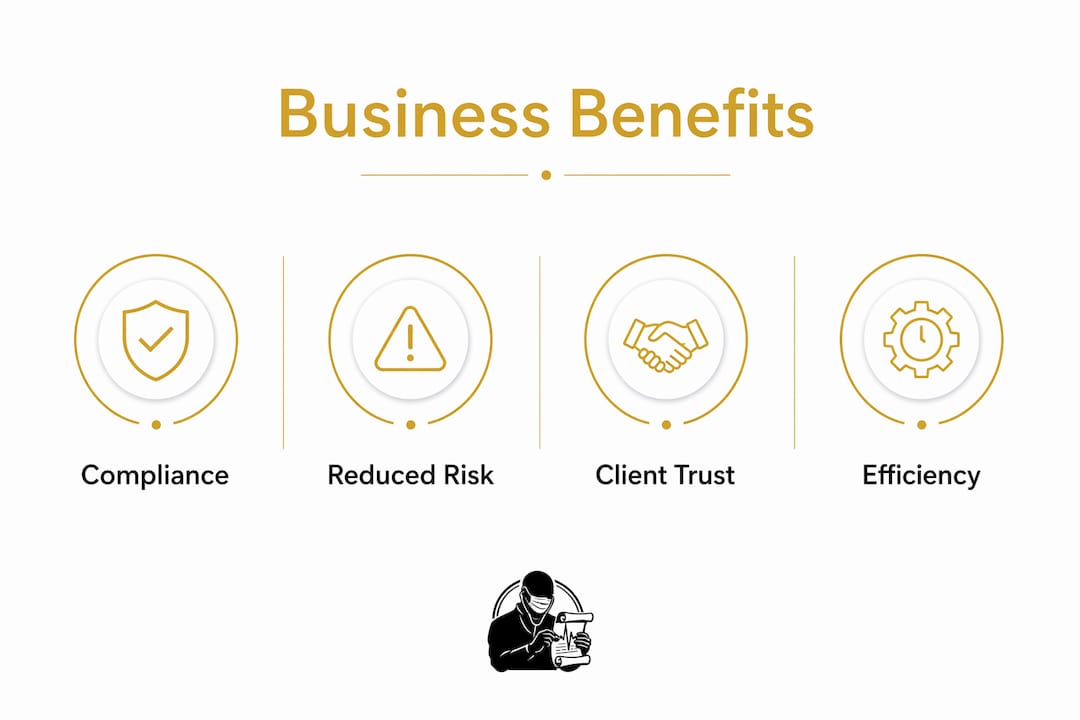
Regulatory compliance and defensible audit trails. Audit trails linked to access permissions convert vague compliance claims into verifiable evidence. When a regulator or auditor requests proof that a specific document was accessed only by authorised personnel, a broker’s log provides the answer in minutes rather than days.
Reduced data breach exposure. Centralised, encrypted document environments reduce the attack surface compared to email-based transfers. Fewer copies of sensitive files exist, and each copy is protected by access controls that email cannot replicate.
Client confidence. Clients in healthcare, legal, and finance increasingly expect their service providers to demonstrate secure handling practices. A broker that issues a trust identifier for every processed document gives clients a tangible record of how their data was managed.
Workflow efficiency. Automated intake, classification, and archiving reduce manual handling steps. Teams spend less time on administrative document management and more time on substantive work.
The table below compares document handling approaches across key criteria:
| Criteria | Email-based transfer | Secure document broker |
|---|---|---|
| Encryption in transit | Inconsistent | AES-256 standard |
| Audit trail | None | Full lifecycle logging |
| Access control | None after send | Role-based, with expiry |
| Regulatory compliance | Difficult to demonstrate | Built-in evidence |
| Sub-processor visibility | None | Contractually defined |
The contrast is not marginal. For any organisation subject to GDPR or HIPAA, the gap between email-based transfer and a compliant broker is the difference between a defensible position and a regulatory exposure.
How do you select and implement a secure document handling broker?
Selecting a broker starts with compliance evidence, not feature lists. The controller versus processor distinction under GDPR defines who is responsible for what. A broker that cannot clearly articulate its processor obligations and produce a compliant data processing agreement is not ready for a regulated environment.
Evaluate candidates against these criteria before any technical assessment:
- Does the broker provide a GDPR-compliant data processing agreement with specific audit rights?
- Can the broker name all sub-processors and produce binding contracts for each?
- Does the broker’s audit trail cover permission changes and administrative actions, not just document access?
- Is encryption applied both in transit and at rest, with customer-managed key options available?
- Does the broker hold relevant certifications such as ISO 27001, and can it provide evidence beyond the certificate itself?
Certifications alone do not satisfy GDPR audit expectations. A broker with an ISO 27001 certificate but no processor-specific audit rights in its contract fails the Article 28 test. Push for the contract terms, not the badge.
Implementation requires three parallel workstreams. First, integrate the broker with existing systems: CRM, ERP, and document management systems (DMS) should feed into the broker’s intake channel rather than operating in parallel. Second, train staff on the new intake process. The most common implementation failure is staff reverting to email because the new portal feels unfamiliar. Third, establish a written policy that prohibits document exchange outside the approved broker channel. Without a policy, shadow IT returns within weeks.
Pro Tip: Run a parallel operation for the first four weeks. Keep the old email process running alongside the new broker channel, and compare the audit logs. The gap between what staff think they are sending securely and what the logs show is almost always larger than expected.
Key takeaways
Secure document handling brokers are the primary mechanism by which regulated organisations convert compliance obligations into verifiable, auditable evidence of correct data handling.
| Point | Details |
|---|---|
| GDPR and HIPAA obligations | Brokers must operate under binding contracts covering security, sub-processors, and audit rights. |
| Audit trail quality | Logs must cover permission changes and admin actions, not just document access events. |
| Replacing email | Encrypted intake portals eliminate shadow data pathways that email-based transfer creates. |
| Sub-processor liability | Controllers remain liable for every sub-processor; binding contracts are non-negotiable. |
| Selection criteria | Demand processor-specific audit rights and sub-processor contracts before any technical evaluation. |
Why the broker’s role will only grow more critical
I have spent years watching regulated organisations treat document security as a checkbox exercise. They sign a data processing agreement, file it, and assume the obligation is met. The regulators I have seen act on enforcement cases tell a different story. The organisations that face the heaviest penalties are not the ones that lacked a DPA. They are the ones that had a DPA but could not produce evidence that the broker actually operated within its terms.
The direction of travel in 2026 is towards demonstrable controls, not declared ones. GDPR enforcement actions across the EU have consistently targeted the gap between what organisations claim their processors do and what the audit trail proves. Comprehensive audit trails that log permission changes alongside document access events are no longer a best practice. They are the minimum standard a regulator will expect to see.
Automation is accelerating this shift. As AI-assisted document processing becomes standard in healthcare, legal, and finance, the volume of sensitive documents moving through broker channels will increase substantially. The organisations that build their broker infrastructure correctly now, with proper contracts, granular permissions, and defensible audit trails, will absorb that volume without increasing their compliance risk. Those that do not will find that scale amplifies every gap they currently have.
The KYC document handling sector illustrates this well. Firms processing identity documents at scale cannot afford a single unlogged access event. The broker is not a convenience. It is the legal and operational foundation of the entire workflow.
How Docpolish supports secure document handling in regulated industries
Docpolish is built specifically for regulated industries where sensitive documents cannot leave a controlled environment during processing. Its client-side PII detection and anonymisation approach means that personally identifiable information never reaches an external AI engine in its original form. The document is anonymised in the browser, processed, and then restored with the original PII intact.
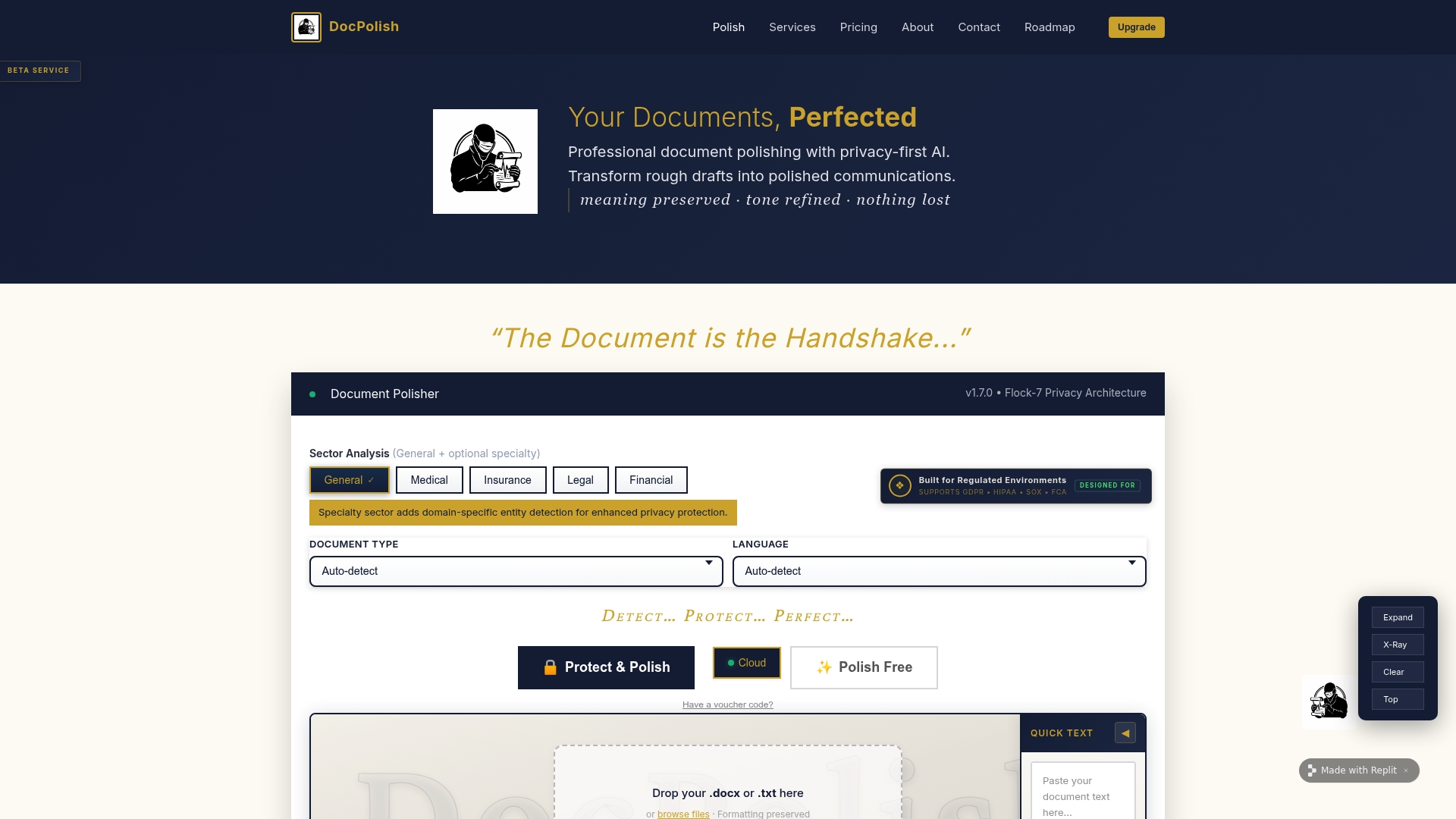
Every document processed through Docpolish receives a trust identifier, creating an audit trail that supports GDPR and HIPAA compliance requirements. For professionals who need confidential data protection during document editing and polishing workflows, Docpolish provides a practical, privacy-first solution. Visit Docpolish to see how it fits your compliance requirements.
FAQ
What is a secure document handling broker?
A secure document handling broker is a controlled intermediary that manages the transfer, storage, and access of sensitive documents using encrypted portals, role-based access controls, and audit trails. They replace email-based document exchange with a compliant, auditable channel.
What does GDPR Article 28 require from document brokers?
GDPR Article 28 requires brokers acting as processors to operate under a binding contract that specifies security measures, sub-processor controls, assistance with data subject rights, and the controller’s right to audit. Generic certifications do not satisfy this requirement.
How do audit trails support regulatory compliance?
Audit trails that log document access, permission changes, and administrative actions provide verifiable evidence of correct data handling. Regulators use these logs to reconstruct exactly who accessed what, and under which permissions, at any given time.
What is the difference between a BAA and a data processing agreement?
A Business Associate Agreement (BAA) is a HIPAA-specific contract governing the handling of ePHI between a covered entity and its service providers. A data processing agreement (DPA) is the GDPR equivalent, defining processor obligations for personal data under EU law. Both are legally required in their respective contexts.
How do I reduce data breach risk in document handling?
Reducing data breach risk starts with replacing email-based transfer with an encrypted broker channel, applying role-based access controls, and maintaining a complete audit trail. Automated antivirus scanning and metadata stripping at intake further reduce exposure.